
Altenar and IBIA: a real-world example of integrity protection
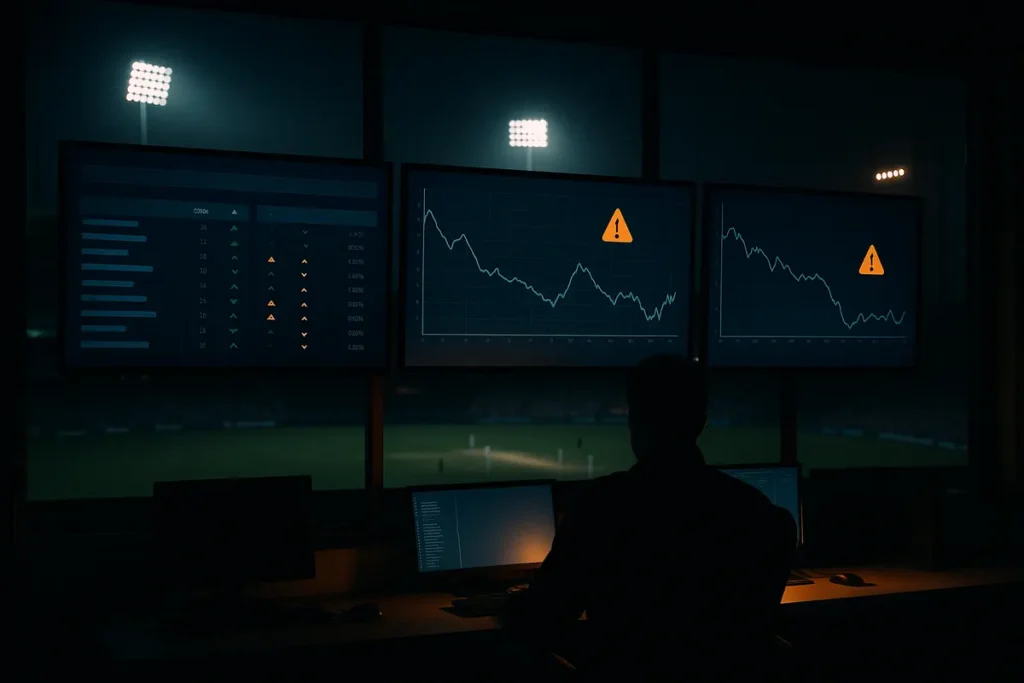
A mid-table football match in a league nobody follows. Kick-off is twenty minutes away, and the price on “over 3.5 goals” collapses from a long shot to a near-favourite. No injury news. No team sheet surprise. Just money, arriving from several accounts at once, all pointed at the same outcome. In a monitored market, that pattern becomes an alert before the whistle even blows. In an unmonitored one, it becomes somebody’s winning bet.
That gap is what sports betting integrity work exists to close, and it is why a fairly dry B2B announcement is worth a bettor’s attention. Altenar, which supplies sportsbook technology to operators, has partnered with the International Betting Integrity Association (IBIA) to strengthen integrity and monitoring standards across Africa’s fast-growing betting markets. The commercial context is not subtle: IBIA’s 2025 Sports Betting Integrity Report, using H2 Gambling Capital data, projects total African gross gaming revenue to climb from US$3.5bn in 2021 to US$19.4bn by 2030, with online betting alone reaching US$16.4bn. GeoPoll research across Ghana, Kenya, Nigeria, South Africa, Tanzania and Uganda describes a market that is already overwhelmingly mobile and digital.
Fast growth plus thin oversight is the exact environment fixers look for. So the deal matters less as news and more as a template, because the same logic applies to any market where betting volumes are rising faster than the rules around them. India included. What follows is what these systems actually do, stripped of the press-release gloss, along with the misconceptions I hear most often from bettors.
Myth: “IBIA is just an industry badge operators buy”
Reality: IBIA is a member-funded body whose members are betting operators, and that is precisely the point of it. Bookmakers hold something no sports federation or police force holds, which is the raw betting data: who staked what, from where, on which market, at which price, and when. An integrity association exists to pool that data across competing companies and look for patterns no single operator can see alone.
The work is unglamorous. IBIA runs a monitoring and alert platform, escalates suspicious betting to regulators and sports governing bodies, and publishes reports on the alerts it has reported, broken down by sport and region. Tennis and football have consistently dominated those alert counts, largely because of the sheer volume of low-tier events with professional betting markets attached and modest player earnings behind them. Anyone quoting a figure should quote it from IBIA’s own published integrity reports rather than from memory, mine included.
What an IBIA partnership does not do is guarantee that every fix gets caught. Monitoring catches manipulation that touches regulated betting markets. Fixes settled through unmonitored channels, private arrangements or offshore books outside any reporting network can pass through unseen. Treat membership as a meaningful signal of data sharing and accountability, not as a certificate of purity.
Myth: “Fixers get caught by watching the match”
Reality: almost nobody is caught by a suspicious-looking no-ball on video. Match-fixing detection starts in the betting data, and video review comes later, once the money has already raised a question.
Betting pattern analysis
Every market has a normal shape. A Ranji Trophy fixture attracts a predictable spread of stakes, average bet sizes and market preferences. Analysis compares live activity against that baseline and flags departures from it. The classic signals are unremarkable on their own and damning in combination:
- Stake sizes far above the normal range for that competition, especially from accounts with no history in that sport.
- Clustered accounts backing the same obscure outcome within minutes of each other, often from the same region or device fingerprint.
- Money piling into niche side markets, such as a specific over, a first-innings total or a booking, rather than the match result.
- Prices that move hard with no news attached, then stay moved even after operators cut their limits.
- Bettors who ignore obviously better prices elsewhere because they already know the outcome and only care about getting the bet on.
Real-time monitoring systems
Speed is the whole game. In-play betting turns a match into thousands of micro markets, and a fix only needs one of them. Monitoring platforms therefore ingest data feeds continuously, compare odds movement across multiple operators, and surface anomalies while the event is live. That cross-operator view is the part an individual bookmaker cannot replicate. A ₹50,000 bet may look ordinary at one sportsbook, but the same bet placed at eleven sportsbooks inside four minutes looks like something else entirely.
Alert protocols
When a flag survives human review, it becomes an alert, and the alert travels rather than sitting in a file. It goes to the relevant regulator and to the sport’s governing body, which in cricket means anti-corruption units such as the ICC’s and the BCCI’s. Operators in the network are told, which is why you sometimes see a market suspended mid-event and stay suspended.
Then it gets slow. Integrity bodies report; they do not prosecute. Sanctions come from sports federations, gambling regulators or criminal courts, using the betting data as evidence alongside phone records and interviews. An alert is a starting point for an investigation, and plenty of alerts end with an innocent explanation, because unusual betting is not the same as corrupt betting.
Myth: “Integrity monitoring only protects the bookmakers”
Reality: operators do protect their own margins, and that motive is exactly why the system works for you too. Their incentives and yours overlap more than you would expect.
Betting integrity monitoring reaches ordinary bettors in four practical ways. First, honest pricing. If a book is being picked off by insiders on a market, it widens margins or drops the market, and you pay for that in worse odds. Detection keeps prices competitive. Second, suspension and voiding. Operators connected to a monitoring network are far more likely to suspend a market mid-event and void bets under published rules than to quietly settle a compromised event. That means your stake back rather than a settled loss on a rigged outcome. Third, a paper trail. When a dispute reaches a regulator, alert records and betting data exist, which is a better position than one person’s word against a company’s. Fourth, market confidence, which sounds abstract until the alternative arrives: markets on suspect competitions get pulled, limits get cut, and the recreational bettor loses access to the events they actually want to bet on.
The honest limits deserve saying out loud. None of this changes the bookmaker’s built-in margin, and none of it makes betting profitable. Integrity monitoring is about whether the contest was real, not about whether your bet has value. The overround stays where it is.
Myth: “I can spot a fixed match from the odds myself”
Reality: you almost certainly cannot, and acting on the belief that you can is how people lose money. Odds move for dozens of innocent reasons: a late team sheet, a pitch report, rain forecasts, thin liquidity in a small market, one large arbitrage bettor, or a sharp syndicate with a genuine model. Suspicion needs cross-operator data and a baseline, which is the one thing a single bettor staring at one app does not have.
Sports betting integrity: what Indian bettors should check
India has no single national betting regulator, rules differ by state, and a lot of Indian traffic lands on offshore sites with wildly varying standards. That puts more of the assessment on you. These are the checks worth doing before you deposit anywhere, and all of them take minutes.
| Signal | What it tells you | Where to verify it |
|---|---|---|
| Named integrity body membership | The operator shares betting data with a cross-operator monitoring network | Member lists published by the integrity body, not just the operator’s own claim |
| Licence from a recognised regulator | Someone external can sanction the operator and hear complaints | Licence number in the site footer, cross-checked on the regulator’s public register |
| Published void and settlement rules | You know what happens to your stake if an event is suspended or annulled | The sports betting rules or terms page, before you bet |
| KYC before withdrawal | Harder for fixers to run mule accounts; also means verified payouts | Account verification requirements at sign-up |
| In-play market suspensions | The operator reacts to unusual activity instead of taking every bet regardless | Watch how markets behave during live events |
| Player protection tools | Deposit, loss and session limits plus self-exclusion are available | Responsible gambling section of the account settings |
Two red flags I would treat as disqualifying: an operator offering exotic in-play markets on obscure youth or semi-professional fixtures with no visible licensing, and terms that let the operator void winning bets at its own discretion without referencing an integrity process. The first is where manipulation concentrates. The second is where your money disappears.
If you want the broader legal picture, read up on how sports betting regulation works across Indian states, and set your limits before you start rather than after a bad week. Our responsible gambling guide covers deposit caps, cool-off periods and where to get help. Betting carries a permanent mathematical disadvantage, and integrity monitoring does nothing to change that. Stake only what you can afford to lose, and if it stops being entertainment, use the tools.
Quick answers
What is IBIA?
The International Betting Integrity Association, a member-funded body made up of betting operators. It runs a cross-operator monitoring and alert platform, reports suspicious betting to regulators and sports governing bodies, and publishes integrity reports on the alerts it has escalated.
How does match-fixing detection work?
By comparing live betting activity against a normal baseline for that competition. Analysts look for outsized stakes, clustered accounts backing the same obscure outcome, unexplained odds movement and heavy money in niche side markets, then review flags manually before issuing an alert.
What happens when match-fixing is suspected?
The alert goes to the relevant regulator and sports body, markets may be suspended, and affected bets can be voided under the operator’s published rules. Investigation and any sanction sit with federations, regulators or courts, not with the integrity association itself.
Why does betting integrity matter to me if I only bet small amounts?
Because it decides whether the event you backed was a real contest, how much margin the bookmaker builds into your price, and whether your stake is returned when something goes wrong. It does not improve your odds of winning, but it does protect the fairness of the bet you placed.